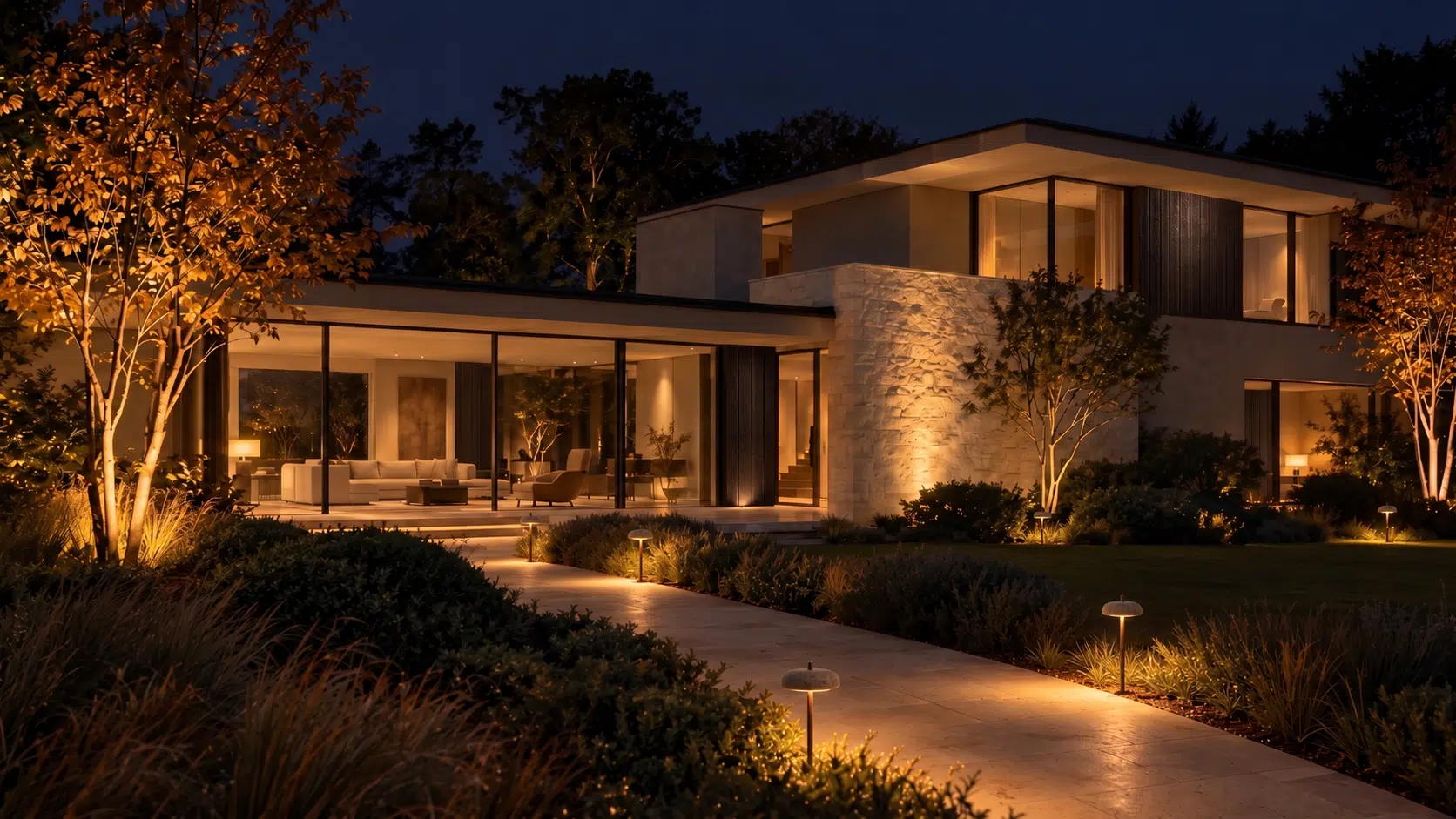
During the day, architecture defines the look of a house; in the evening, light takes over. Just look at this residence: a few illuminated trees, grazing light across a natural stone façade, and low-level lamps lining the path. It doesn’t take much, yet it instantly feels like coming home.
Outdoor lighting essentially serves three purposes. It ensures safety along routes—such as driveways, entryways, stairs, and paths. It makes outdoor spaces functional, like a terrace or an outdoor kitchen. And, importantly, it creates atmosphere—turning a tree, a wall, or a water feature into a striking, illuminated backdrop after dark.
This also transforms the home from the inside. Without outdoor lighting, a glass wall becomes a black mirror at night; with a few well-placed light sources in the garden, the view remains, making the living space feel larger. This makes a significant difference, especially during the autumn and winter months when darkness falls early.
Warm light, precisely directed
Quality lies in the details: warm-toned light, beams directed exactly where they are needed, and fixtures that are aesthetically pleasing even during the day. Lining this path are the *Pantarhei* garden lamps by Il Fanale, featuring a rounded shade atop a slender stem. They cast a soft, downward glow onto the path and surrounding greenery, without creating any glare.
Plan your outdoor lighting early
Outdoor lighting should be an integral part of the overall design. We install cables and power supplies before the paving and landscaping are completed, and we synchronize the outdoor lighting scenes with the interior lighting. This ensures that the garden lights turn on automatically as dusk falls, always perfectly complementing the atmosphere inside the home.
In short
Design outdoor lighting with safety, functionality, and ambiance in mind. Use warm-toned light and a limited number of well-placed light sources, and ensure the infrastructure is installed at an early stage.