Back to overview
Quiet, healthy, and precisely at the right temperature: the new indoor climate.
Blog - 15 October
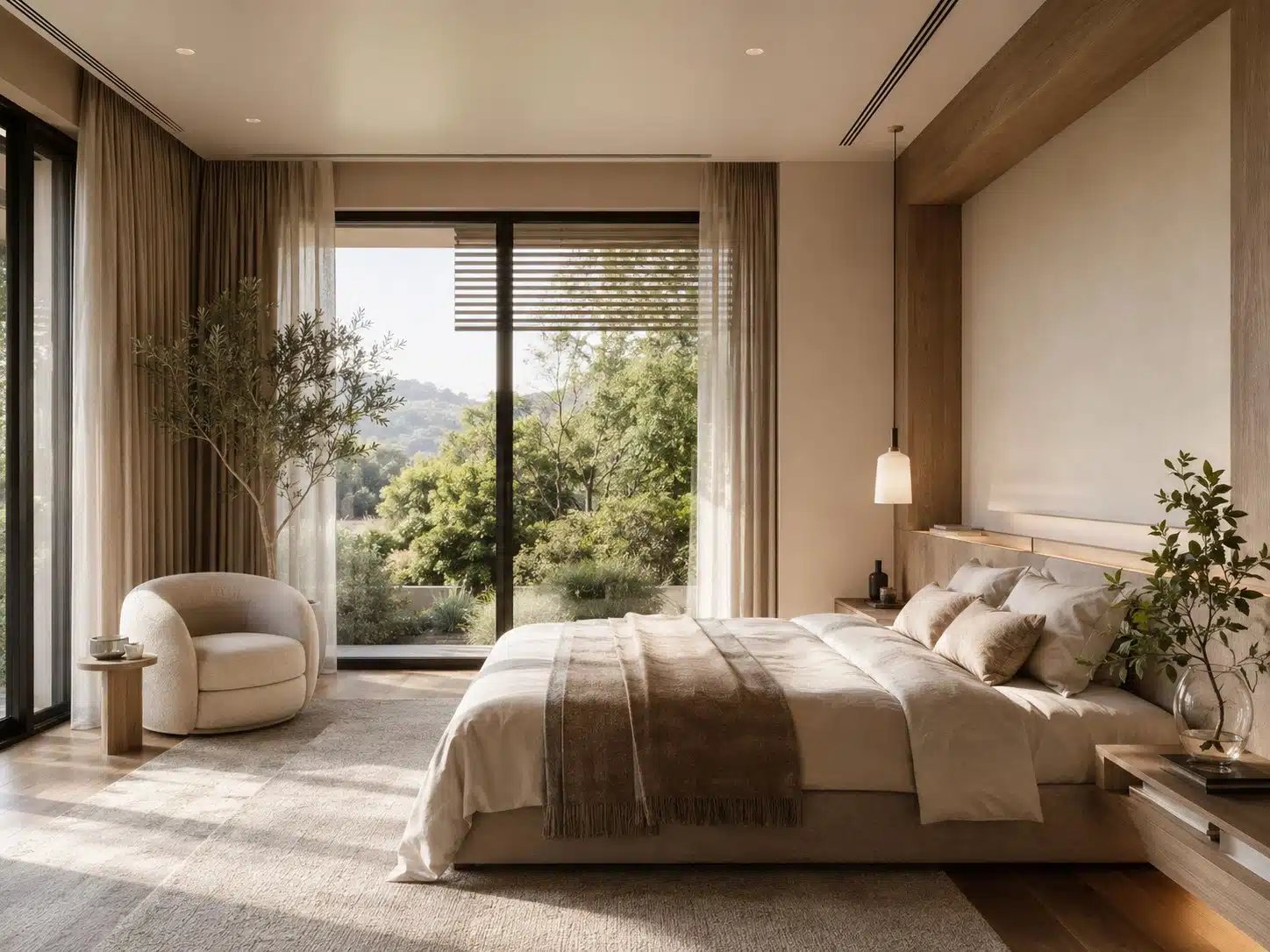
Comfort is about more than just a temperature of 21 degrees. Air velocity, radiant heat, humidity, CO₂ levels, noise, and solar gain collectively determine how a space truly feels.
Large expanses of glass, high ceilings, and varied usage zones make the indoor climate of an exclusive villa complex. Dynamic modeling reveals where heating demands arise in winter and cooling loads in summer. Solar shading is often more effective than retrofitting additional cooling capacity: external shading keeps heat out before it passes through the glass.
Underfloor heating provides even temperature distribution and works well with heat pumps. Underfloor cooling can support comfort levels but is limited by dew point and response time. To handle rapid or high cooling loads, options include silent convectors, climate ceilings, or air handling systems. Condensation monitoring and precise control systems are essential.
Ventilation removes moisture, odors, and CO₂ while introducing filtered outdoor air. A heat recovery system minimizes energy loss. In high-end applications, we pay special attention to low air velocities, large duct cross-sections, noise attenuation, odor zoning, and the seamless integration of air grilles. Bedrooms require a silent night mode that ensures a continuous supply of fresh air.
Humidity requires a nuanced approach. Air that is too dry can be uncomfortable and affect wood, artwork, or musical instruments, while excessive humidity increases the risk of condensation and mold. Humidification or dehumidification may be desirable but requires hygienic design and proper maintenance.
Sensors are useful when the values they provide are visibly utilized for control and diagnostics—not merely as a collection of gadgets.
Design temperature, ventilation, humidity, solar shading, and acoustics as a single climate system, and measure performance after completion.