Back to overview
A garden for all the senses: daily tranquility without an appointment.
Blog - 13 October
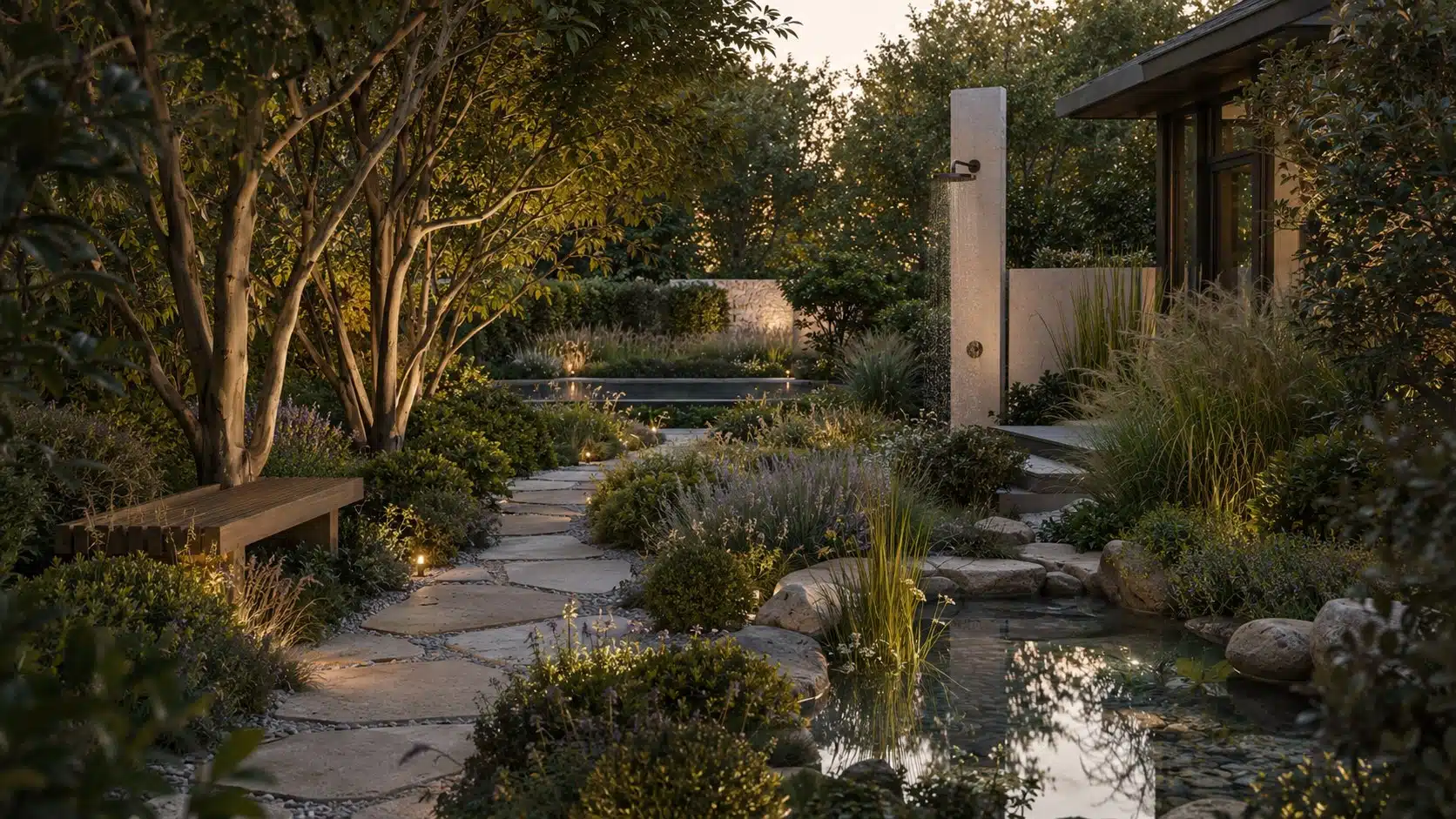
Wellness does not always have to be an active pursuit. Simply walking, sitting, and breathing for a few minutes in a well-designed garden can help you step back from the day’s hustle and bustle.
A sensory garden is neither cluttered nor themed. It relies on subtle layers: the rustling of grasses, the scent of herbs and blossoms, cool stone beneath bare feet, the shifting light beneath a tree, and the gentle sound of water. These sensory experiences slow the mind without demanding any effort from the visitor.
Layout and flow are key. A gently winding path naturally slows the pace and reveals the garden in a series of scenes. Sheltered seating areas offer a choice between sun and shade, proximity and seclusion. Strong sightlines from the house remain, yet not everything is revealed at once.
Planting choices are based on structure and seasonality rather than just flowering times. Evergreen forms provide a sense of calm, multi-stemmed trees create a natural canopy, and perennials introduce seasonal change. Fragrant plants are placed where people walk slowly or sit. Avoid species that cause significant nuisance, allergies, or slippery surfaces in high-traffic areas.
Evening light also contributes to well-being. Low-level, warm lighting guides the way and highlights tree trunks, walls, or water surfaces without washing out the garden with flat light. Darkness remains part of the composition, supporting privacy, ecology, and the natural day-night rhythm.
Design not only what the garden shows, but also what it lets you hear, smell, feel, and experience in every season.