Back to overview
Home automation that adapts to the resident, not the other way around.
Blog - 8 October
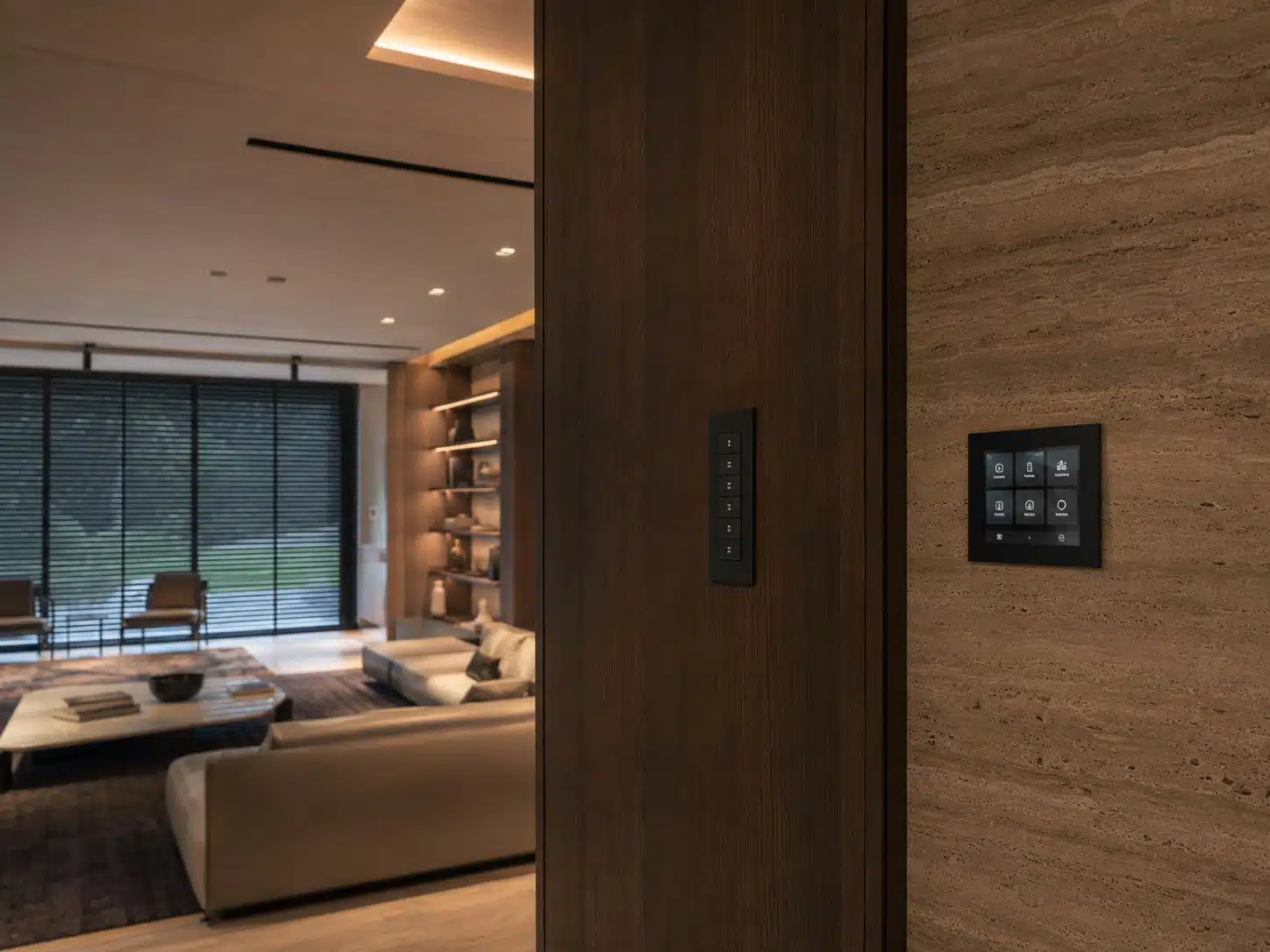
De Opera Domotica, based in Oisterwijk, has been working on high-end home automation for over twenty years, placing ease of use at the heart of their work. Their approach—dubbed “Easy Access”—aligns with our own design philosophy: complex technology should operate seamlessly behind the scenes, while the resident enjoys a simple, consistent control experience.
It all starts with understanding daily routines. How is the home used in the morning? Which lighting settings suit dining, reading, or entertaining guests? What should happen when leaving the house, going to sleep, or heading off on vacation? Based on these scenarios, systems for lighting, climate control, sun shading, audio-visual equipment, and—if desired—security are integrated. A single “Home Off” button, for instance, can switch off lights, adjust blinds, modify the temperature, and activate specific security functions.
The underlying infrastructure is just as important as the visible controls. De Opera Domotica specifies a central hardware setup comprising a router, switches, a firewall, and a patch cabinet tailored to the specific home. For a large residence, this entails professionally designed cabling, robust indoor and outdoor Wi-Fi coverage, segmented network zones, emergency power for critical systems, and ample space for ventilation and maintenance access.
High-end home automation must also maintain basic functionality without an internet connection. Physical controls remain intuitive, scene labels are clear and understandable, and residents are not dependent on a single smartphone. Good programming ensures a calm, predictable system where future modifications can be implemented in a controlled manner. Certification, documentation, and long-term service are therefore just as important as the brands chosen.
Design user scenarios and redundancy first, then screens and components. Simplicity on the front end requires expertise on the back end.