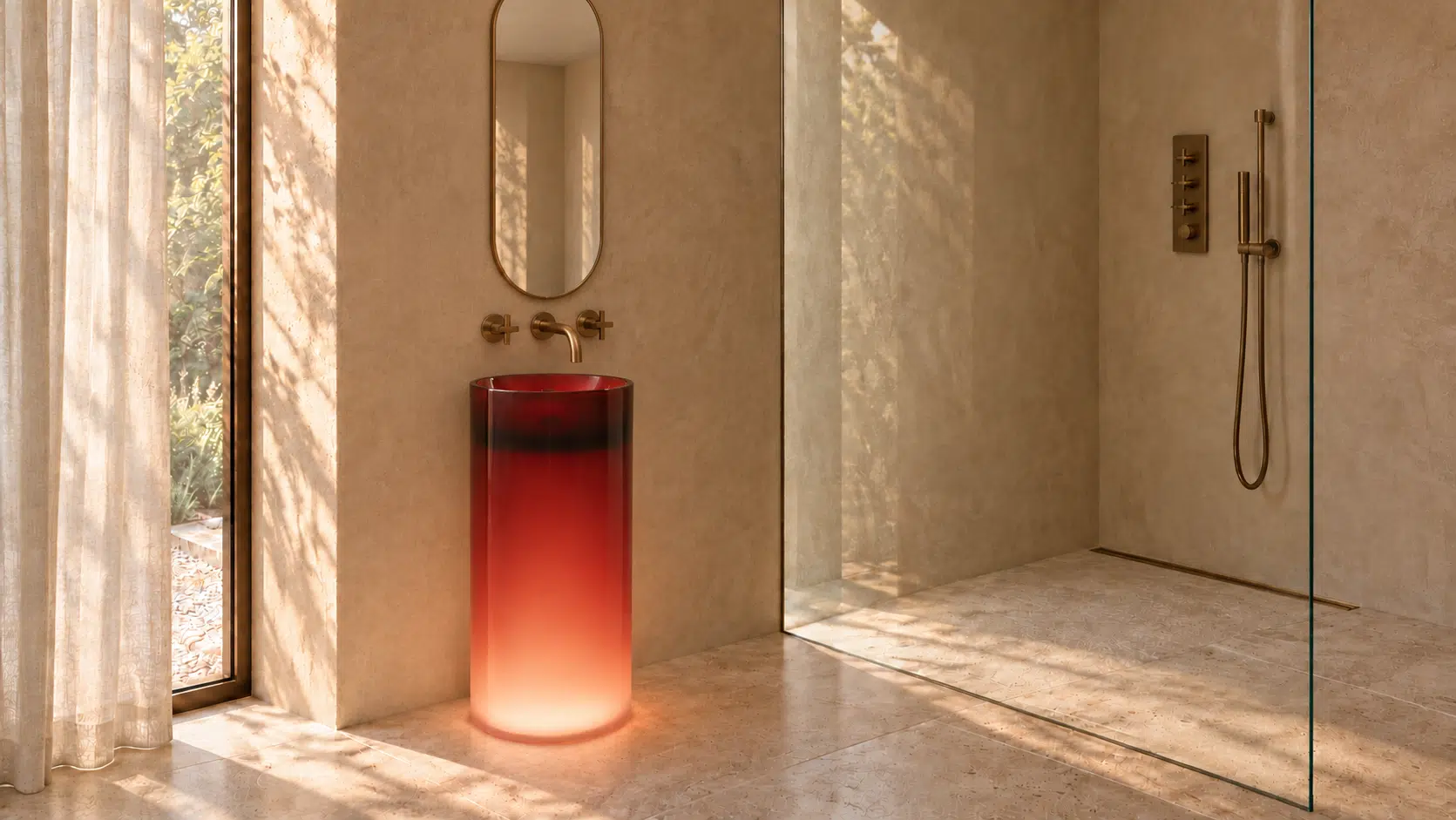
Light-colored natural stone on the floor, sunlight filtering through sheer curtains, and a washbasin in the center of the room that seems to glow—natural stone brings a sense of tranquility and timelessness to a bathroom. However, exposure to water, soap, and daily wear and tear requires careful decision-making.
Not all stone reacts the same way. Limestone, travertine, and marble are softer and susceptible to acids—found in certain cleaning products and cosmetics—whereas granite and quartzite are harder. This doesn’t mean you should avoid softer stone; it simply means you must be intentional about your choice of finish and maintenance.
Natural stone in the bathroom: finish and character
The finish determines both the safety and the aesthetic appeal of the floor. While polished stone is stunning on a wall, it becomes slippery when wet underfoot. For the shower area, therefore, a honed or lightly textured finish is the better choice. In this design, the same stone flows seamlessly from the main bathroom into the walk-in shower, with only a narrow drainage channel marking the transition.
Because the stone itself offers such a serene backdrop, there is room for a single, striking element to take center stage. The ‘Breeze’ washbasin by Antonio Lupi stands like a freestanding, translucent red column, appearing to glow in the sunlight. Above it, a wall-mounted bronze faucet by Gessi complements the space—a warm tone that is echoed in the shower fixtures and the mirror.
Impregnation and waterproofing
And then there are the elements you don’t see. Impregnating the stone protects it against moisture and stains, though this process needs to be repeated periodically. Furthermore, waterproofing, floor grading (slope), and grouting must be executed precisely; otherwise, water could seep behind the tiles. And in the case of stone with a distinct pattern, it is worth viewing the slabs beforehand to determine where each one will be placed.
In Brief
Select the type of stone based on its intended use and the finish based on the required slip resistance; ensure that waterproofing and the layout of the stone slabs are carefully planned in advance. A neutral-looking stone provides the space for one striking feature to stand out.