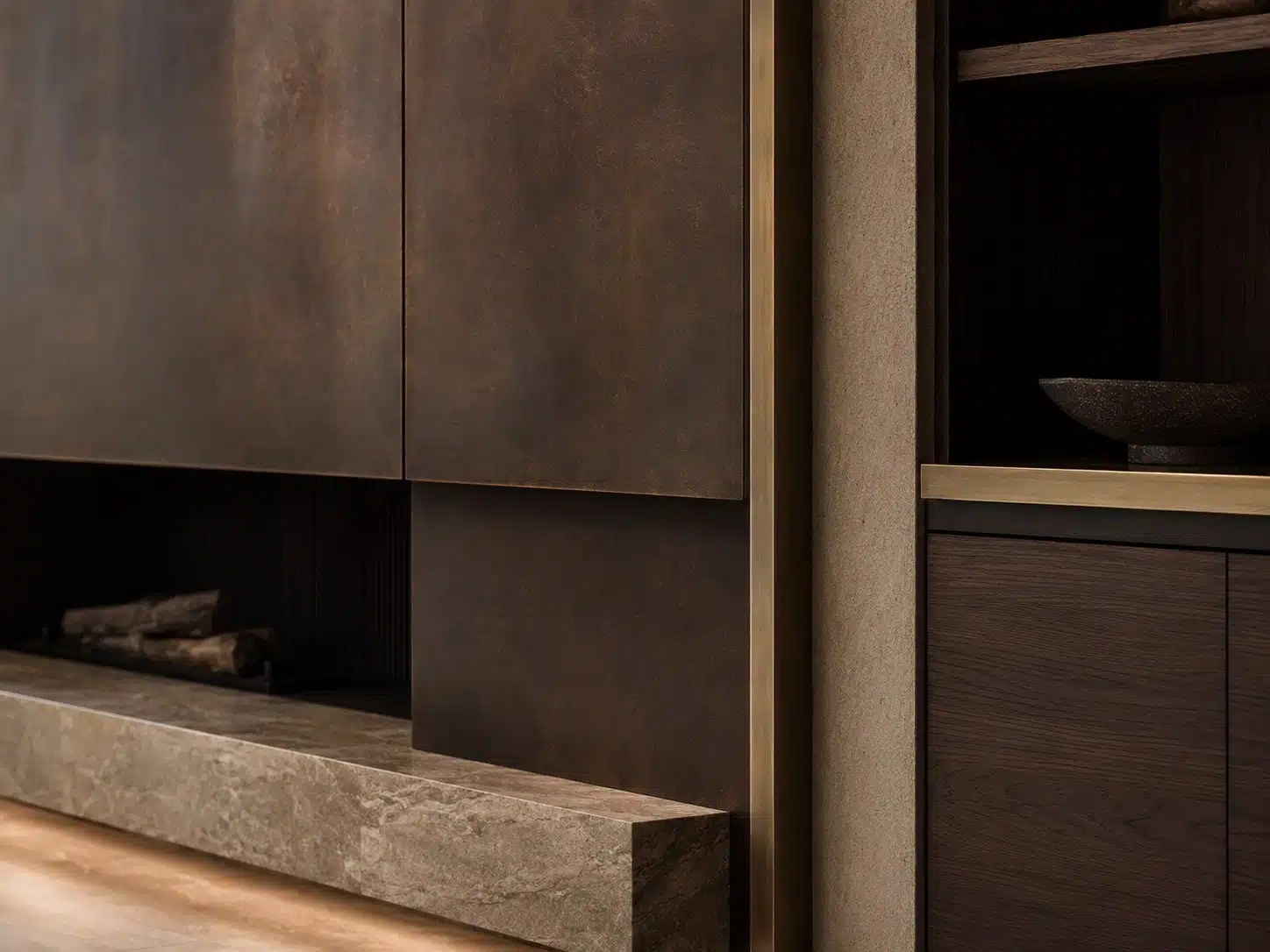
Metal in the interior as a subtle accent
Metal can lend sharpness, depth, and precision to an interior. Often, the most beautiful application is not the largest, but the most thoughtfully considered.
World of Materials notes that metals in construction are almost always used as alloys. This composition influences color, strength, corrosion resistance, and aging characteristics. For interiors, this means that “bronze-colored” is not a precise specification. Genuine bronze, brass, PVD-coated stainless steel, and lacquered steel all react differently to light, touch, and the passage of time.
In a refined, high-end concept, we use metal to accentuate lines: a slender profile alongside natural stone, a deep reveal around bespoke joinery, a skirting board that visually vanishes, or a handle that feels comfortable in the hand. A patina adds layers to the design; the surface avoids a flat, industrial look, instead acquiring nuances that shift in harmony with the surroundings.
Balance is essential. An excess of shiny metal can easily veer into mere decoration. A limited number of consistently repeated details creates a stronger impact. Bronze paired with dark wood radiates warmth; black steel can lend a graphic quality to a composition; brushed stainless steel is suitable when a cooler, technical aesthetic is desired. The level of sheen must harmonize with the stone, glass, and lighting.
Proper specification prevents disappointment. Always request a representative sample, define the desired brushing direction and protective coating, and evaluate weld seams, corners, and fixings. A “living” patina naturally involves slight variations. This is not a flaw, but a mark of quality—provided the process is controlled and appropriate for the intended use.
In short
Specify metal not only by color, but also by alloy, grain direction, patina, gloss level, protective coating, and desired aging.