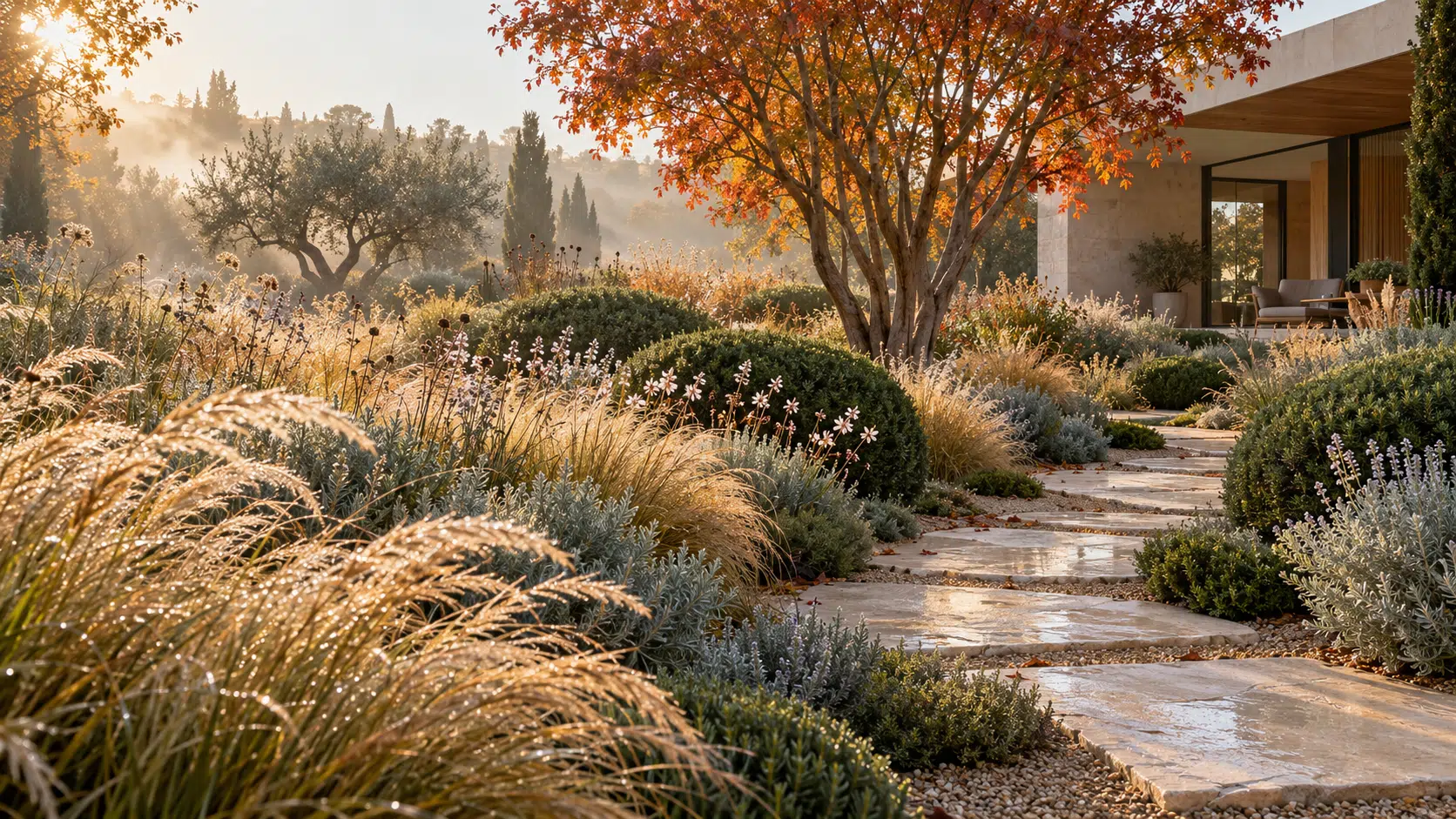
Early morning, late October. Mist still clings to the hills, the grasses are damp with dew, and the low-hanging sun bathes everything in a golden glow. Many gardens are designed with June in mind; we believe a garden should be just as beautiful in October.
It begins with structure. The green, rounded shrubs in this garden remain in place year-round. When the flowers fade, these shapes hold the garden together. Along with the multi-stemmed tree by the terrace and the olive trees further away, they define the garden’s form—even in the depths of winter.
Nestled among them are plants that look their best precisely at this time of year: ornamental grasses with plumes that catch the backlight, silvery-grey lavender, and a few late-blooming species. We leave the spent seed heads standing; they look stunning when covered in dew or frost, and the birds love them, too.
The autumn garden and low-angle light
Autumn light is, in fact, our most important design tool. The sun sits low in the sky, shining right across the garden. For this reason, we position the most striking autumn plants so that they can be viewed from inside the house, illuminated by the morning or evening sun. The tree by the terrace turns shades of orange and red every year—a sight you can enjoy right from the comfort of your sofa.
A garden to walk through
Naturally, a garden should also be a place you can walk through. Large stepping stones set into the gravel remain accessible even when it’s wet, while a few warm points of light keep the garden visible when darkness falls early. This ensures that, even in autumn, the garden remains a space to be enjoyed every single day—both from within the home and out in the open air.
In short
Give the garden a green structure that remains all year round, choose plants that are at their best in autumn, design with the low-angle light in mind, and ensure there are paths that remain accessible even when wet.