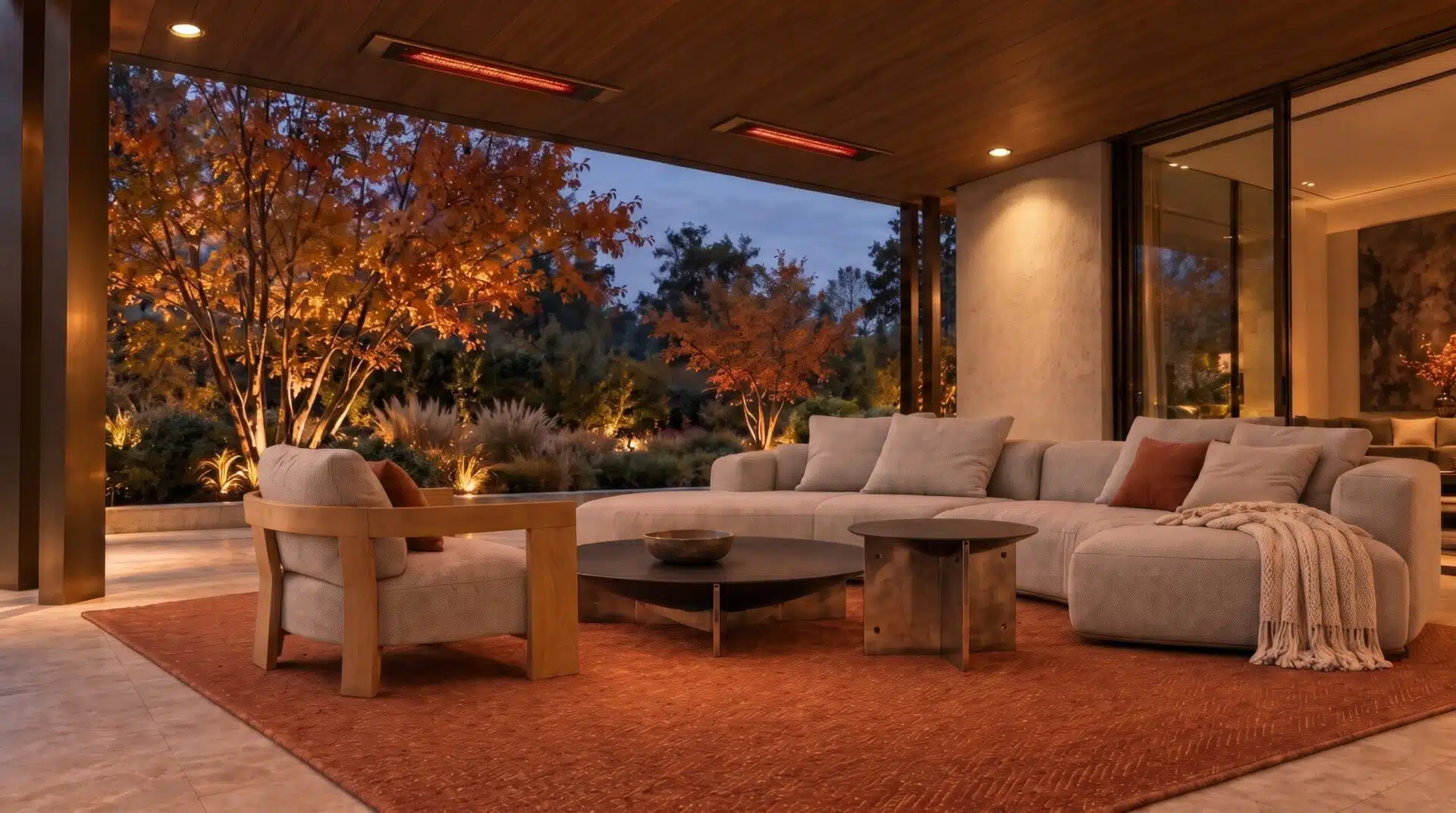
A Friday evening with friends. The doors to the living room are wide open, the trees in the garden are glowing orange, and no one feels like heading indoors. Part of the reason is what you see above you: two slender panels set into the wooden ceiling, emitting a soft red glow. You know a patio heating system is good when you notice the sensation rather than the technology itself.
Heating the air outdoors is largely pointless—a single gust of wind, and the warmth is gone. That’s why we use radiant heat on the terrace. Infrared panels warm the people and surfaces they are directed toward, much like the sun. Here, they are neatly integrated into the wooden ceiling, positioned among the recessed spotlights, directly above the sofa. During the day, they are barely noticeable.
Patio heating: infrared, gas, or an open fire?
Which type of heat should you choose? Electric infrared provides targeted warmth, turns on instantly, and pairs well with solar power. Gas heaters offer plenty of heat but are often less efficient and less sustainable. An outdoor fireplace creates a wonderful atmosphere, though it’s harder to control with precision. We often combine them: a fire for the experience, and infrared for comfort.
Shelter and textiles
The less wind there is, the less heat you need. This lounge area is tucked deep beneath the roof, right against the house. Then there are the textiles: a large rug by Ferreira de Sá in a deep rust tone lies on the natural stone—the color alone makes the space feel warmer. The curved sofa and the armchair with its light-wood frame are by Giorgetti. Between them sit two tables by Henge, featuring dark tabletops and bronze-colored bases. Cushions in terracotta shades and a knitted throw complete the look. In this way, the atmosphere of the living room extends seamlessly beyond the glass facade and out into the open air.
Smart control
Heating an outdoor space consumes energy, so how you control it is just as important. We divide the heating panels into zones that can be switched on and off independently. Using a timer or occupancy sensor, the heating only operates when someone is actually present. This ensures the terrace remains a comfortable space well into the autumn, without becoming an energy-guzzling feature.
In short
Opt for directional infrared heaters mounted in the ceiling and ensure the area is sheltered from the wind. Textiles add warmth, and by using heating zones and a timer, the heat is only active when you are actually there.