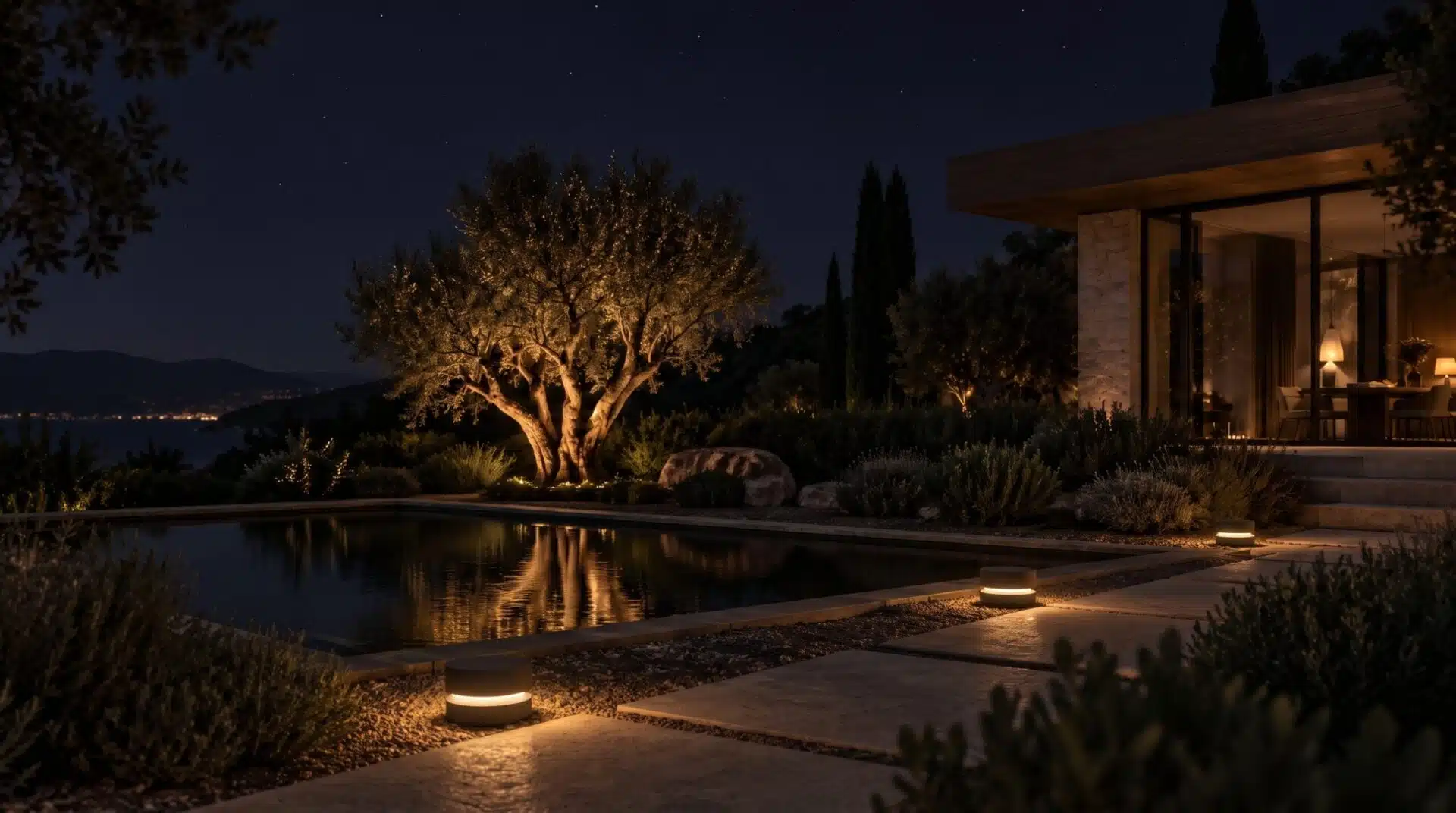
A clear evening. Stars hang above the garden; an old olive tree is softly illuminated, its image reflected in the water. Everything else is dark—and that is precisely what makes it so beautiful.
The most common mistake in garden lighting? Too much light. An excess of spotlights, bright lamps, and cool white light flattens the garden and creates a restless atmosphere. Instead of looking out at your garden from inside your home, you are met with glare. We prefer to use a few carefully placed light sources, positioned exactly where they belong.
A single tree in the spotlight
Be intentional about what you choose to highlight. In this case, it is the olive tree, illuminated from the base so that both the trunk and the canopy are brought to life, while the rest of the garden remains in darkness. The water adds another dimension, reflecting the tree once more. This contrast between light and shadow creates depth, making the garden feel larger—and a touch mysterious.
Along the path, low-profile outdoor fixtures by Vibia cast a soft, warm glow downward—just enough to walk safely toward the water or the terrace. You see the light on the stones, not the fixture itself. Opt for warm light, around 2700K or lower, and ensure that everything can be dimmed.
Garden lighting and nature
Darkness is also beneficial for the natural world. Artificial light can disrupt insects, birds, and bats. By illuminating only what is necessary—and using timers for the rest—you allow the garden to remain a living, breathing space after dark. Plus, you get to see the stars again.
In short
Illuminate only what you wish to highlight—choose warm, shielded lighting that can be dimmed—and leave the rest of the garden intentionally dark.